
January 1, 2026
If you are a boater choosing between Royal Palm Yacht & Country Club in Boca Raton and the canals of Lighthouse Point, you face a high‑impact decision. Both offer prized water access, but the day‑to‑day experience, rules, and costs are very different. The right choice depends on your vessel, how you like to operate, and whether you want club services or private autonomy.
In this guide, you will learn how these two options compare for dockage, ocean access, services, and governance. You will also get a practical checklist to verify vessel fit and next steps to move forward with confidence. Let’s dive in.
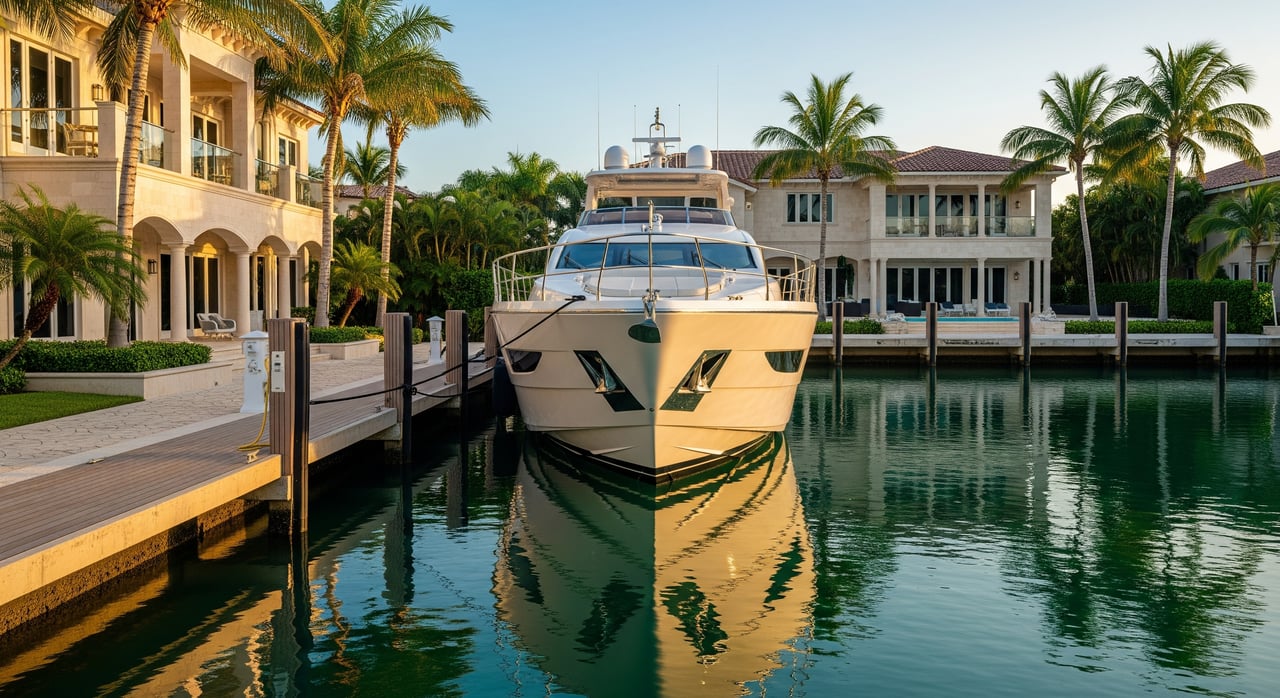
Royal Palm Yacht & Country Club sits within Boca Raton’s 33432 corridor. It centers on a private club marina environment with managed dockage and gated access. Lighthouse Point is a residential canal city just south of Boca Raton. It offers backyard docks along a network of canals that feed into the Intracoastal Waterway.
At a glance, you are comparing a private‑club marina lifestyle with a private residential dock lifestyle. That difference affects everything from slip access to hurricane procedures.
Use these four lenses to frame your decision. Each item should be verified with primary sources before you buy.
Royal Palm typically offers fixed, assigned slips for members within a managed marina setting. You benefit from dockmaster oversight, coordinated operations, and on‑site amenities. Membership and slip eligibility can be interconnected, and some clubs use ownership, leasing, or member assignment models. Confirm how slips are allocated, whether there is a waitlist, and any transfer rules tied to home sales.
Lighthouse Point is primarily private dockage on single‑family waterfront lots. Dock size, construction, and use are governed by city rules and permits. Your dock capacity depends on lot width, canal depth, and permitted dimensions. You control your dock’s upkeep, subject to municipal specifications and any HOA rules.
Always measure and verify before you decide. Obtain the following measurements from surveys, permits, and direct conversations with the marina or city:
Both locations feed into the Intracoastal Waterway with Atlantic access via nearby inlets. For Boca Raton and 33432, you will typically use Boca Raton Inlet or route to Hillsboro Inlet depending on your exact slip location and vessel needs. Lighthouse Point owners often favor Hillsboro Inlet for a faster ocean run.
Do not rely on generic “minutes to the ocean” claims. Estimate with this approach:
Also confirm any shoaling notices, dredging plans, or tidal constraints with local authorities and marinas. For vessels with tall masts or superstructure, identify every fixed bridge and compare air clearance to your air draft, including antennas and arches.
Royal Palm’s private‑club model commonly includes managed security, dockmaster staff, and structured hurricane procedures. On‑site or nearby services may include shore power in various amp configurations, potable water, and pumpout scheduling. Confirm whether fuel is available on site or where the nearest public fuel dock is located. For major work, identify nearby yards, haulout capacity, and project timelines.
In Lighthouse Point, you control your own service plan. Verify electrical capacity at the dock, water access, internet availability, and pumpout options. Map the nearest fuel docks, haulout yards, and travelift capacity suitable for your vessel. Many owners prefer this autonomy but should plan for hurricane preparation, contractor access, and scheduling without centralized marina coordination.
In a private club environment like Royal Palm, you will review initiation fees, monthly dues, and any capital assessments. Membership categories can differ for marina and social use. Confirm policies for guest docking, slip assignment rules, insurance minimums, crew or vendor gate access, and hurricane plans. Ask if slip rights are deeded, leased, or member‑assigned and whether they transfer with a property sale.
In Lighthouse Point, look to the city code and any HOA rules. You will verify dock permitting limits, seawall and bulkhead responsibilities, number of vessels per lot, and environmental rules that can affect expansion. Check for any special assessments tied to dredging or seawall projects. Insurance requirements are also common for waterfront properties, so obtain exact coverage limits from the relevant authority.
| Factor | Royal Palm Yacht & CC | Lighthouse Point |
|---|---|---|
| Dockage model | Private‑club marina with assigned slips for members; managed operations | Private docks at single‑family homes; owner‑managed |
| Control vs support | Strong marina support, structured rules, less autonomy | Maximum autonomy, owner sets service plan |
| Ocean access | Routes within Boca Raton, often Boca Raton or Hillsboro Inlet depending on location | Typically routes to Hillsboro Inlet; canal‑to‑ICW access |
| Services | Dockmaster, security, coordinated hurricane procedures, on‑site or scheduled services | Owner secures fuel, pumpout, contractors, and hurricane plan |
| Governance | Membership fees, bylaws, slip and guest policies, insurance requirements | City permitting, possible HOA rules, dock size limits, insurance |
| Privacy and social life | Gated club environment and curated social calendar | Private neighborhood setting without required club membership |
Prove compatibility with documents and measurements, not assumptions. Use this checklist during due diligence:
Create a simple, repeatable calculation so you can compare apples to apples:
This method helps you compare Royal Palm and Lighthouse Point routes for your specific boat and usage pattern.
A private‑club marina typically coordinates a hurricane plan for members. Ask how slips are prioritized, what services are included, and what you pay for separately. In a residential canal environment, you will assemble your own plan for hauling, extra moorings, and contractor support. In both cases, confirm required hull and liability insurance, additional insured provisions, and any rider requirements for hurricane season.
Request written schedules and policies from the club or city so you can compare total cost of ownership.
If you want a gated, managed marina experience with defined standards and a social calendar, Royal Palm will likely feel aligned. If you want full control, direct backyard access, and flexibility on your dock, Lighthouse Point is a strong fit. The right answer comes from vessel compatibility and how you prefer to operate day to day.
When you are ready, bring your captain, marine surveyor, and your real estate advisor together. Walk the docks, run the routes, and confirm the paperwork. That is how you make a confident, high‑value decision in this corridor.
Ready to evaluate active and off‑market options that match your vessel and lifestyle in Boca Raton, Lighthouse Point, and neighboring enclaves? Request a private consultation with The Buchbinder Group.
Stay up to date on the latest real estate trends.
Design, Renovation & Remodeling
Where high-end design meets a smart return on your investment.
Boca Raton, FL
Where Luxury Living Meets Total Rejuvenation
101 N Federal Hwy 5th Fl
Boca Raton FL 33432